

To Explore
Explore Delhi
Akshardham Temple
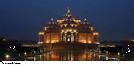
Swaminarayan Akshardham in New Delhi, epitomises10,000 years of Indian culture in all its breathtaking grandeur, beauty, wisdom and bliss. It brilliantly showcases the essence of India’s The grand, ancient-styled Swaminarayan Akshardham complex was built in only five years through the blessings of HDH Pramukh Swami Maharaj of the Bochasanwasi Shri Akshar Purushottam Swaminarayan Sanstha (BAPS) and the colossal devotional efforts of 11,000 artisans and BAPS volunteers. The complex was inaugurated on 6 November, 2005.
India Gate
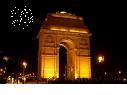
India Gate in Delhi is constructed as a memorial in honor of 90,000 soldiers who sacrificed their lives during World War I. 'Amar Jawan Jyoti' or the flame of the immortal warrior is burning under it since 1971. The eternal flame reminds the sacrifice of these brave soldiers. These soldiers valiantly sacrificed their lives during the Indo-Pakistan War of December 1971.
Red Fort
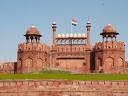
Shah Jahan shifted his capital from Agra to Shahjahanabad and laid the foundation of Red Fort, or the Lal Quila, on 16th April 1639. It took nine years to build this mighty citadel and it got completed on 16th April 1648. Derives it's name as it has been made of red sand stone, the Red Fort is one of the most magnificent palaces in the world. Indian history is also closely linked with this fort. It was from here that the British deposed the last Mughal ruler, Bhadur Shah Zafar, marking the end of the three century long Mughal rule.
President House
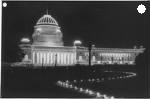
The official residence of the President of the country, the building was also designed by Luytens. It was the official residence of the Viceroy when the British ruled India. With 340 rooms and an area of about 330 acres. The Mughal Gardens within the complex are a treat for the eyes and are open to public during certain periods of the year.
Parliment House
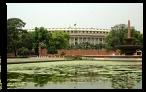
Parliament House, New Delhi : A marvelous piece of architecture which can be admired only from outside on account of security restrictions. Close to President's House, it is circular structure almost a kilometer in circumference, and was designed by the famed architect Luytens. It is the seat of Indian Parliament.
Humayun's Tomb
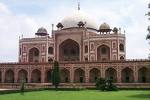
Humayun's Tomb, Delhi : Taj Mahal is known have been inspired by Humayun's Tomb, and in many ways this magnificent red and while building is as spectacular as the famous Taj Mahal in Agra. Tomb is memorial by a grieving wife and was built by his widow Haji Begum in 1565-66, nine years after his death.
Safdarjang's Tomb
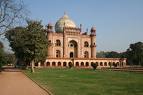
Safdarjang's
Tomb : It is the last enclosed garden tomb in Delhi in the
tradition of Humayun's Tomb though it is far less grand in scale. It was built
in 1753-54 as the mausoleum of Safdarjang, the viceroy of the Awadh under the
Mughal Emperor, Mohammed Shah. It has several smaller pavilions.
Jantar Mantar
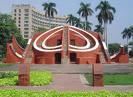
Jantar Mantar, Delhi : Within Connaught Place is the Jantar Mantar Observatory built by the Rajput King of Jaipur Sawai Jai Singh in 1724. It was believed to have been built with masonry instruments for observing the movements of the stars and planets.
Qutab Minar
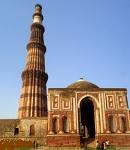
QUTUB MINAR, DELHI : This magnificent structure in the southern part of the capital was built by the Muslim King, Kutab-ud-din Aibak in 1199 AD. A part of it which could not be finished by completed by another Muslim King, Iltutmish. At the foot of the Qutab Minar stands the first mosque to be built in India, the Might of Islam Mosque. Qutab-ud-din began construction of the mosque in 1193, but it has number of additions and extensions during the years.
Wanna know more and in Detail!!
